

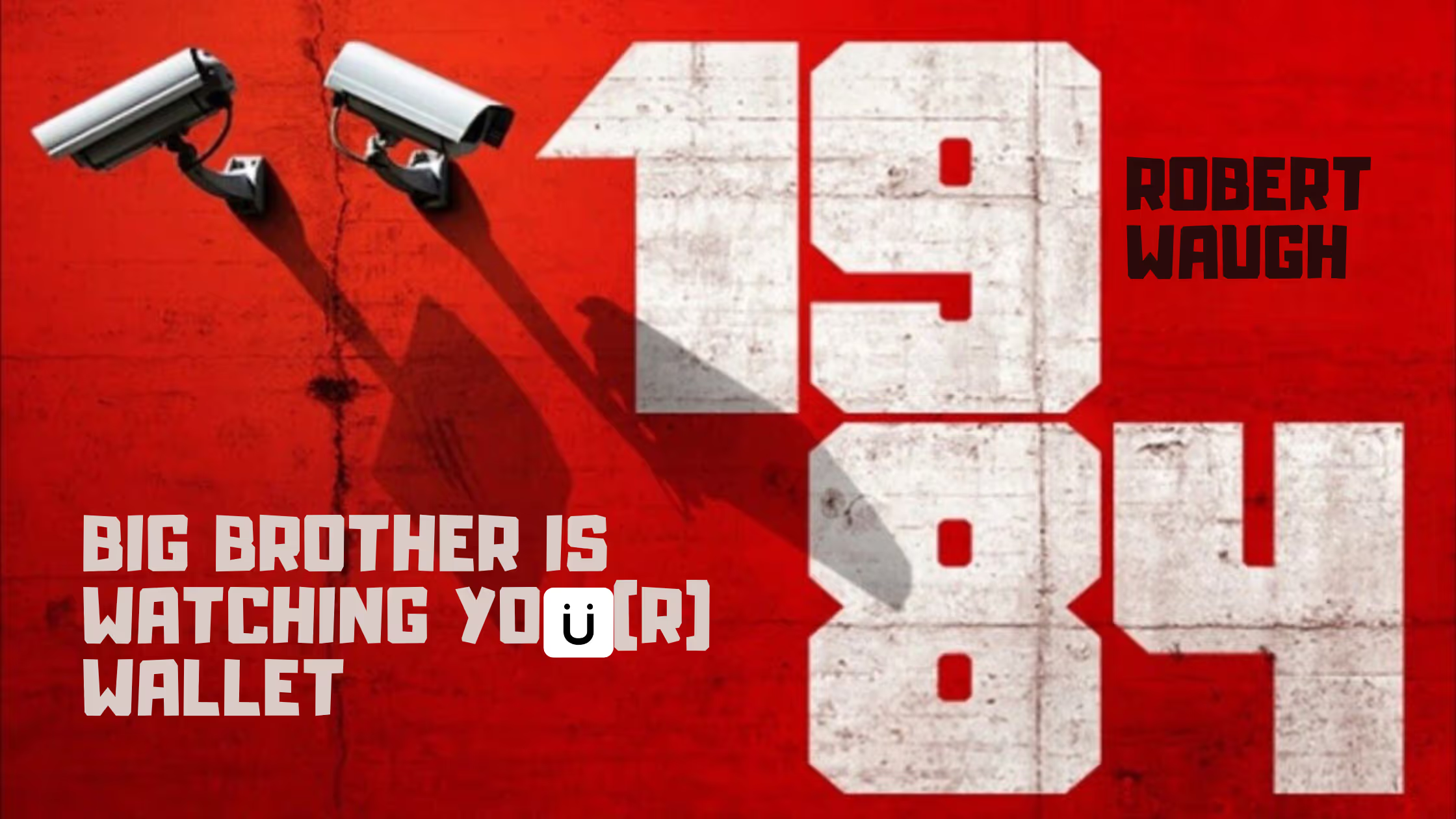
Sometimes life is deliciously random. My child has a book report due, and, as is often my morning routine, I was clearing up after said child and saw the book lying open.
“It was a bright cold day in April, and the clocks were striking thirteen…”
George Orwell’s iconic opening to 1984 (published in 1949) foreshadows a world of government surveillance and control. Over her Cheerios, my child asked if that dystopian vision could ever really come true? Her question made me ponder the rise of Central Bank Digital Currencies (CBDCs). Could digital money give the government unprecedented control over my child's pocket money?
While Orwell didn’t write about money per se, his themes of control and surveillance translate unsettlingly well into concerns about CBDCs. Programmable by design, CBDCs allow governments to monitor, restrict, and dictate how, when, and where we spend our money. Imagine a future where your spending habits are regulated, and certain items - maybe deemed unhealthy or immoral - are off-limits. “Sorry, no more sweets. You have reached your approved limit.”
Farfetched? Maybe. But possible? Absolutely. With CBDCs, it’s a very real possibility.
In Isaac Asimov’s Pebble in the Sky (published a year later in 1950), protagonist Joseph Schwartz is thrust into a future society where people earn tokens that expire if not spent by week’s end. These tokens, controlled by a central authority, dictate not only when people can spend but also what they can buy. Sound familiar? CBDCs could usher in a similar era of financial obedience, where governments control both the lifespan and purpose of your hard-earned cash.
Just like in 1984, where The Party controls thought, speech, and reality, CBDCs could centralise financial power into the hands of a few, and in doing so erode the personal freedom of many. The programmability of CBDCs means governments could limit spending in certain sectors or even block donations to political causes they don’t approve of. Financial freedom would be traded for the convenience of a digital wallet under state control.
The antidote to this dystopia is decentralisation. Blockchain technology offers a future where financial control is distributed, transparent, and immune to the whims of any central authority. Unlike CBDCs, no one can program or control how you use your money. Your financial life is truly yours, free from government overreach.
In decentralised systems, power is shared among the users, preserving autonomy and preventing the kind of Orwellian control we fear. With blockchain, transactions are secure, private, and, most importantly, free from manipulation by governments or central banks.
CBDCs, if unchecked, could turn Orwell’s fiction into reality, with our financial lives under constant surveillance. The allure of convenience should not blind us to the dangers of programmable money. As Orwell and Asimov warned, when power is centralised, personal freedom is the first casualty.
Blockchain and decentralisation are our best defense against this future. They offer a path to financial freedom, where individuals - not governments - control their own money.
As Orwell’s clocks strike thirteen and Asimov’s tokens turn to dust, we need to act to keep financial freedom in the hands of the many, not the few. After all, do you really want Big Brother watching your wallet?